Schema Markup and Structured Data for Business Website SEO: Stand Out in Search
In this article
Two shoe shops sell nearly the same products at similar prices. In Google's results, the first appears as an ordinary blue link. The second appears with star ratings, price, and stock status right under its title. Where does the eye go? Almost certainly to the second, and not because its site is better, but because it told the search engine explicitly what its page contains.
That is the purpose of structured data, or schema markup. Search engines are very good at reading text, but they still have to guess: is the number 250 a price, a model number, or a year? Is that name the article's author or a person the article is about? Structured data removes the guesswork with clear, standardised labels embedded behind your page.
This article explains what schema markup is, why it matters for traditional SEO and AI driven search, the types most useful to businesses, how to apply it in the JSON-LD format, common mistakes, and how to test and monitor the results. You do not need to be a programmer to follow the logic.
Summary
- Structured data is a standard label that tells search engines what your page content means
- It can unlock rich results in search and help AI engines cite you correctly
- Use JSON-LD, and mark up only content that is actually visible on the page
- Start with Organization, WebSite, Article, Product, FAQ, and Breadcrumb types
- Test with official tools and monitor the search console reports regularly
What structured data is
Structured data is a way of writing information about a page in a shared vocabulary called Schema.org, supported by Google, Bing, and other search engines. The vocabulary defines hundreds of types such as Product, Article, Organization, Event, and JobPosting, each with standard properties such as name, price, date, and rating.
There are three formats: Microdata, RDFa, and JSON-LD. Google recommends JSON-LD because it is separate from the display HTML, a single script block that is easy to create, maintain, and test. You do not have to insert attributes into every element, so the risk of breaking the design is far smaller.
It is important to understand that structured data is not a direct ranking factor. Adding it does not automatically raise your position. The benefit comes by two routes: a more attractive search result that improves click through rate, and a more accurate understanding of your pages and business entity by search engines.
Why structured data matters more and more
Search results are no longer just ten blue links. There are product carousels, answer boxes, star reviews, knowledge panels, and AI generated summaries. Many of these elements are built from structured data. Sites that do not provide it miss the chance to appear in the spaces that draw the most attention.
AI driven search engines and conversational assistants also rely on a clear understanding of entities. When a business name, address, services, prices, and article authors are stated explicitly, the chance that a system presents your information correctly and names the source rises. Structured data is a language machines understand with little ambiguity.
For multilingual businesses, structured data helps affirm the relationships between language versions, the content language, and currency. It complements alternate language tags and sitemaps so each market is served the right version with consistent information.
The schema types most useful for businesses
Start with the Organization or LocalBusiness type on the home page. It states the official name, logo, social profile links, contact details, address, opening hours, and service area. This information helps search engines build a profile of your business entity and can strengthen the knowledge panel and local results.
The WebSite type, together with a sitelinks search box, and BreadcrumbList on every inner page, describe the site's structure. Breadcrumbs often appear in search results as a tidy navigation path, replacing a long and uninformative raw URL.
For blogs and editorial content, use Article or BlogPosting with the headline, image, author, publisher, date published, and date modified. Accurate dates matter because they show freshness, but do not change the modified date without a meaningful content change, since that is treated as manipulation.
For online shops, the Product type with an Offer (price, currency, availability), brand, SKU, and aggregate rating has the most impact. For service pages, use the Service type. For events, jobs, or courses, dedicated types exist that unlock their own rich displays.
Mark up what is visible, not what you wish for
The golden rule of structured data: information in the markup must match content users actually see on the page. Marking up reviews that do not exist, prices that differ from the display, or hidden FAQs violates the guidelines and can cause loss of rich results or manual action.
How to implement with JSON-LD
JSON-LD is written as a script block of type application/ld+json in the head or body of the page. Its content is an object with the Schema.org context, a type, and a set of properties. You can combine several objects on one page, such as Article, Breadcrumb, and Organization together, and link them with identifiers so they form a coherent graph.
On sites built with modern frameworks, the best approach is to generate JSON-LD programmatically from the same data that renders the page. That way the price, title, and date in the markup stay in sync with the display, and you need not edit each page by hand when data changes.
On CMS platforms, SEO plugins can generate most basic schema automatically. Check the output, because default configurations are often incomplete or produce duplicates when several plugins are active at once. Make sure only one source is responsible for each schema type.

FAQ, reviews, and other rich results
FAQ markup tags question and answer pairs. Note that Google has limited the FAQ rich result to well known government and health sites, so the visual result may not appear. Even so, the markup still helps machines and AI systems understand the structure of your Q&A content.
For reviews and ratings, use markup only when the reviews are genuine, collected from real customers, and shown on the page. Reviews written by a business owner about their own business do not qualify for star displays in many contexts. Never fake a rating figure.
Other useful types include HowTo for step by step content, Video with duration and thumbnail, and JobPosting for career pages. Study the official documentation for each feature because requirements and availability change over time.
Common mistakes
The most common mistake is markup that does not match the page: the price in the schema differs from the displayed price, or availability still says "in stock" when stock has run out. This happens easily when markup is written by hand and not connected to the same data source as the display.
The second mistake is missing required properties or wrong formats, such as a date without ISO format, a price with a currency symbol inside the number, or a relative image URL. These errors make the markup invalid and ignored, sometimes without a clear warning.
The third mistake is duplication and conflict: two plugins both generating Organization schema with different data, or one page holding several products marked up as if all were the main product. Audit the sources of markup and simplify so each entity is defined once, clearly.
The fourth mistake is marking up irrelevant content with intent to mislead, such as adding star ratings to a page that is not about a product. This violates the guidelines and risks a penalty. It is better to have little honest markup than much misleading markup.
Testing and monitoring
Use Google's Rich Results Test to check whether a page qualifies for certain displays, and the Schema.org validator to check syntax. Test before and after launch, and make this check part of the checklist every time you create a new page type.
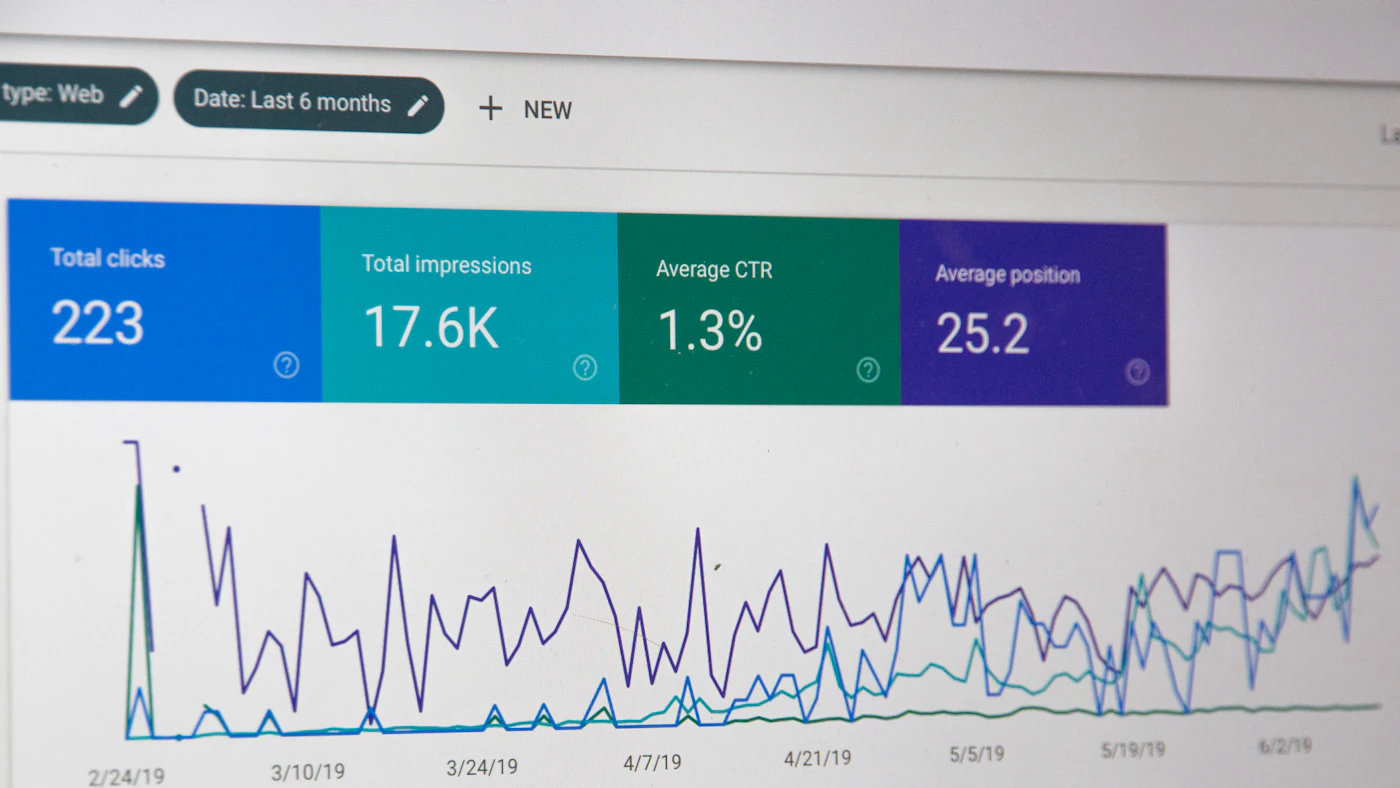
Once the site is live, monitor the enhancement reports in the search console. They show the number of pages that are valid, have warnings, or contain errors for each rich result type. A spike in errors after a site update usually signals a template change that broke the markup.
- 01Add Organization and WebSite on the home page
- 02Add Breadcrumb on all inner pages
- 03Use Article on every blog post with accurate dates
- 04Add Product and Offer for online shops, tied to real stock data
- 05Test with official tools before and after release
- 06Monitor the enhancement reports in the search console every month
Example: a service provider's site with a blog
A software development company has a site with service pages and a blog. Previously every page appeared as an ordinary blue link. They added Organization on the home page, Service on service pages, and Article and Breadcrumb on each blog post, all generated automatically from the same data that renders the pages.
Within a few months, search results showed tidy breadcrumb trails and a business name with a consistent logo, and the click through rate on blog articles rose. More importantly, when the team translated the blog into several languages, consistent language and date markup helped each version appear in the right market.
The lesson: structured data is a small investment that earns interest over time, especially when generated from a single data source so it is always accurate without repeated manual work.
Closing
Structured data is not a secret trick but an honest, standardised way to help search engines and AI systems understand your business. Start with the basic types, generate them automatically from the same data as the display, test them with official tools, and keep them consistent with the visible content.
Combined with useful content, good page speed, and a correct multilingual structure, schema markup helps your business appear clearer and more convincing wherever prospective customers search, in any country and language.
Want your website to stand out in search results?
The AG·SORA team can help apply structured data, technical SEO, and a correct multilingual structure on your business website. The first consultation is free and without obligation.
Free consultationRecommended for you
Reading related to this topic
AI Based Search and the Future of SEO: Keeping Your Business Website Found and Trusted
AI assistants and summary answers are changing how people search. What changes and what stays, content that is hard to replace, technical foundations, AI crawler access, reputation beyond the website, and more meaningful measurement.
First Party Data and Tracking Without Third Party Cookies: Knowing Customers the Lawful Way
A guide to building first party data: data types, a fair value exchange, technical foundations, consent management, and measuring marketing when cross site tracking is limited.
UX Writing and Microcopy for Business Apps and Websites: Small Words That Decide Conversion
Principles of interface writing, button labels, forms, error messages, empty states, brand tone, multilanguage localisation, and how to test them.
Free checklist: choosing a software house
24 points to evaluate a vendor before you sign. Can be saved as a PDF.
Ready to build a system that grows with your business?
Discuss your needs with the AG·SORA team, no cost, no commitment.