Data Quality and Data Governance for Mid-Sized Businesses: So Reports and Decisions Can Be Trusted
In this article
- Summary
- Why data quality determines business results
- Dimensions of data quality worth understanding
- Where data problems usually come from
- Data governance without excess bureaucracy
- Cleaning the data you already have
- Preventing problems at the point of entry
- Unifying sources: one truth, many users
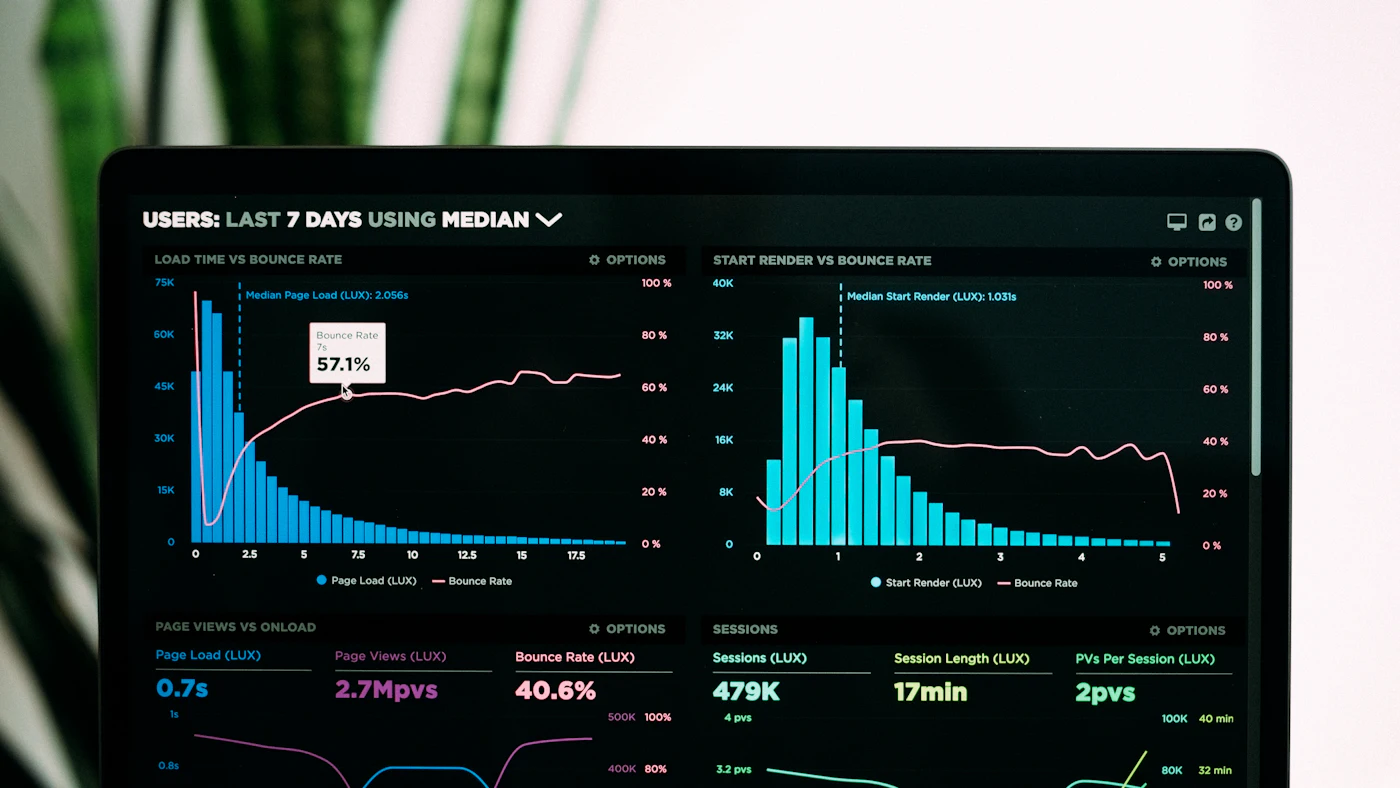
- Data quality and dashboards
- Data quality and personal data protection
- The role of automation and AI in maintaining data quality
- A realistic 90-day plan
- Common mistakes
- Frequently asked questions
- Conclusion
Every company has sat through a meeting that turned into an argument about numbers. The sales team's report differs from the finance report, the active customer count from marketing does not match the one from customer service, and the stock in the system does not agree with what the warehouse counted. At that point the problem is no longer a reporting tool that is not clever enough, but the quality of the data that feeds it. A beautiful dashboard only repeats the mistakes already in the data.
This article covers data quality and data governance with a practical approach for mid-sized businesses: what quality data means, where problems usually come from, how to measure it, who is responsible, and how to fix it without building heavy bureaucracy. The aim is for your business decisions, automation, and AI projects to stand on numbers you can trust.
Summary
- Quality data is accurate, complete, consistent, timely, and unique, and fit for its intended use
- The biggest source of problems is not technology but manual entry, many systems without a single source of truth, and the absence of data owners
- Start with the data that most affects money and decisions, such as customers, products, prices, and stock, not all data at once
- Lightweight governance needs only data owners, standard rules, periodic measurement, and fixes at the source
- Prevention at the point of entry is far cheaper than mass cleanup repeated every year
Why data quality determines business results
Bad data rarely shows up as one big disaster. It appears as small daily friction: an invoice sent to an old address, a promotion sent twice to the same person, an order delayed because of a wrong item code, or a report that must be tidied by hand before it can be presented. Added up, the cost is real even though it is seldom recorded as a single expense line.
The most common effects:
- Misdirected decisions: management judges a product as a bestseller or a loss-maker from inaccurate figures
- Wasted time: staff spend hours reconciling data between spreadsheets
- Poor customer experience: wrong names, incomplete history, or duplicate billing
- Compliance risk: unmanaged personal data is hard to delete or protect as required
- Failed technology projects: automation and AI amplify data errors rather than fix them; see [company data readiness before starting an AI project](/blog/kesiapan-data-perusahaan-sebelum-memulai-proyek-ai)
Dimensions of data quality worth understanding
Data quality is not a single number. Several dimensions should be measured separately because their causes and fixes differ.
- Accuracy: does the data reflect reality? Example: a customer phone number that is actually active
- Completeness: are the important fields filled? Example: customers with no email or products with no category
- Consistency: is the same data the same everywhere? Example: a customer name written three different ways, or "pcs", "piece", and "unit" used interchangeably
- Timeliness: is the data fresh enough to use? Example: stock updated only weekly while sales happen hourly
- Uniqueness: is each entity recorded only once? Example: the same customer appearing as three separate records
- Validity: do values follow format and rules? Example: a birth date in the future or a postal code containing letters
Which dimension matters most depends on the use. For billing, address and amount accuracy are most critical. For marketing analytics, uniqueness and completeness matter more.
Where data problems usually come from
Understanding the source helps choose the right fix. The most common patterns:
- Manual entry without validation: forms that accept anything, producing typos, varied abbreviations, and empty fields
- Many systems without a source of truth: customers managed in the CRM, the POS, and the ERP under different rules, never properly synchronized
- Spreadsheet imports: each import brings a different format and new duplicates
- Process changes without data changes: a new product uses a new category, but old data is never updated
- No owner: when everyone may edit and nobody is responsible, data tends to degrade slowly
- Rushed system migration: dirty data is moved as is into the new system; guidance is in [preparing data migration for a new system](/blog/persiapan-migrasi-data-sistem-baru)
Data governance without excess bureaucracy
The term "data governance" often sounds heavy, as if it required a large committee and thick documents. For mid-sized businesses a lightweight version is effective enough. It only answers four questions: who owns this data, what rules apply, how do we know its quality, and what happens when there is a problem.
Appoint data owners
Each important data group needs an owner on the business side, not only in IT. Customer data is owned by the head of sales or customer service, product data by the head of operations or merchandising, supplier data by the head of purchasing, and employee data by HR. The owner sets definitions and rules, approves structural changes, and is accountable for quality. IT acts as the technical guardian, not the decider of content.
Build a shared data dictionary and definitions
Many arguments about numbers are really arguments about definitions. What is an "active customer": someone who bought in the last 30 days, 90 days, or a year? What is "sales": before or after discounts, with or without tax? Write the definitions on one shared page and agree on them. This simple document often resolves more conflict than expensive tools.
Set standard rules
Standard rules cover name formats, allowed units, category lists, required fields, and plausible value ranges. They should be enforced by the system, not just written in a guide. A related discussion is in ERP master data: item, customer, and supplier codes.
Measure periodically
You cannot fix what you do not measure. Choose a few simple metrics and watch them monthly: percentage of customers with a valid email, number of duplicates detected, percentage of products without a category, or the gap between system stock and physical counts. The trend matters more than the absolute figure.
Cleaning the data you already have
Initial cleanup is almost always needed, but it should follow a sensible order so it does not have to be repeated in vain.
- Pick a small scope: start with the one data group that most affects money, such as active customers or the best-selling product catalog
- Profile first: count empty fields, duplicates, and inconsistent formats before changing anything, so you know the scale of the problem
- Define duplicate merge rules: which record becomes the master, which fields are kept, and who approves doubtful merges
- Standardize formats: names, addresses, units, and categories according to the standard rules
- Keep a backup: copy the data before cleanup so you can roll back if there is a mistake
- Verify a sample: manually check part of the result before applying it to all data
- Log changes: who changed what and when, so it can be traced
Cleaning without fixing the source is like draining a tub whose tap still leaks. Within months the condition returns to what it was.
Preventing problems at the point of entry
Prevention is the most economical part of the whole data quality effort. A few effective techniques:
- Form validation: email, phone number, postal code, and date formats checked as they are entered
- Structured choices: use pick lists for categories, units, and statuses rather than free text
- Duplicate search when creating records: the system warns if a name or phone number resembles an existing one
- Required fields that are truly required: do not allow saving without the data later processes need
- Autofill from trusted sources: for example pulling data from documents or catalogs, as in [automating data entry from documents](/blog/otomatisasi-input-data-dari-dokumen)
- Proper access rights: only authorized people may change core data; see [designing user access rights](/blog/merancang-hak-akses-pengguna)
Unifying sources: one truth, many users
When data is spread across many systems, the most important question is: which system is the source of truth for each type of data? For example, the ERP is the source of truth for products and prices, the CRM for customer communication history, and the HRIS for employee data. Other systems read or synchronize from that source rather than keeping their own freely edited versions.
Integration between systems must be designed with clear rules: sync direction, frequency, and conflict handling when two systems change at once. The technical discussion is in webhooks and real-time integration for business. For mid-sized businesses whose reporting is becoming complex, a data warehouse and business intelligence setup becomes the place to unify data for analysis, but it still depends on data quality at the source.
Data quality and dashboards
A dashboard users trust is one whose numbers match reality and match other reports. A few habits help:
- Show the last update time on every dashboard
- State the metric definition near the number
- Provide a simple reconciliation, for example dashboard total sales compared with the total in the financial report
- Flag doubtful data rather than hiding it
Guidance on designing the display is in business dashboards for daily decisions. Users who find wrong numbers a few times will stop trusting every dashboard, and restoring trust takes a long time.
Data quality and personal data protection
Data governance also touches the obligation to protect personal data. Knowing what personal data you hold, in which system, for what purpose, and for how long is a prerequisite for fulfilling user requests and maintaining security. Data no longer needed should be deleted or anonymized according to a retention policy. More is discussed in personal data protection for websites and applications.
The role of automation and AI in maintaining data quality
Modern tools can help detect anomalies, find duplicates that are similar but not identical, and suggest categories. Yet the results still need human review in doubtful cases, and the quality of suggestions depends on training data. Use AI as an assistant that speeds up the data team's work, not as a replacement for rules and data owners. To measure the quality of AI output itself, see evaluating AI and LLM output quality for business applications.
A realistic 90-day plan
Here is a framework you can adapt to your company's size.
- Days 1–30: choose one priority data group, appoint an owner, write definitions and standard rules, then profile the current state to get a baseline
- Days 31–60: clean the priority data, install validation at the point of entry, and decide on the source of truth and sync direction
- Days 61–90: set up monthly measurement, review results with the data owners, then decide on the next data group
After 90 days you have not only cleaner data but also habits that keep it clean.
Common mistakes
- Trying to clean all data at once so the project never finishes
- Handing all responsibility to IT without involving business owners
- Cleaning data without fixing the cause at the point of entry
- Not agreeing on metric definitions so number arguments repeat
- Buying expensive tools before rules and owners are clear
- Migrating dirty data to a new system hoping the problem disappears on its own
Frequently asked questions
Does a small company need data governance?
It can be very simple: one page of definitions, one owner per data group, and validation on input forms. Small scale is no reason to leave data messy, because the cost of wrong numbers is still felt.
What tools are needed?
Many improvements need no special tools, only validation in the application, standard rules, and discipline. Data cleaning or monitoring tools become useful only once rules and owners are clear.
How long until data is considered high quality?
There is no finish line. Data quality is an ongoing process because the business and systems keep changing. What can be achieved is an improving trend and growing trust.
How do we start if the data is already very messy?
Pick the one data group that most affects money, measure its condition, then fix it while installing prevention at the point of entry. Real results in a small scope create support for expansion.
Conclusion
Data quality is not merely a technical project but an organizational habit. With clear owners, agreed definitions, standard rules enforced by the system, and periodic measurement, a company can reduce daily friction and make decisions on numbers it can trust. Start with the data that most affects money, fix it at the source, and expand step by step.
Agsora helps businesses tidy data, design validation and integration between systems, and build dashboards whose numbers can be relied on. If you would like to assess the condition of your company's data, we are ready to talk.
Build dashboards on data you can trust
The Agsora team helps tidy data, unify sources, and build accurate dashboards for your business decisions.
Free ConsultationRecommended for you
Reading related to this topic
Slowing Database and Business App Performance: Causes and How to Fix Them
Why systems slow down over time, how to measure before fixing, the role of indexes and caching, managing old data, and when to add servers.
Data Warehouse and Business Intelligence for Mid Sized Businesses: One Source of Truth for Decisions
Understanding data warehouses and BI for nontechnical readers: why operational system reports fall short, signs you need one, starting from business questions, figure definitions, data quality, technical options, dashboards that get used, and data culture.
Website and Mobile App Analytics for Business Decisions: Measuring What Matters While Respecting Privacy
How to set up analytics that help decisions: starting from business questions, the tracking plan, acquisition and retention metrics, funnels, data quality, privacy and consent, dashboards, and experiments.
Free checklist: choosing a software house
24 points to evaluate a vendor before you sign. Can be saved as a PDF.
Ready to build a system that grows with your business?
Discuss your needs with the AG·SORA team, no cost, no commitment.